
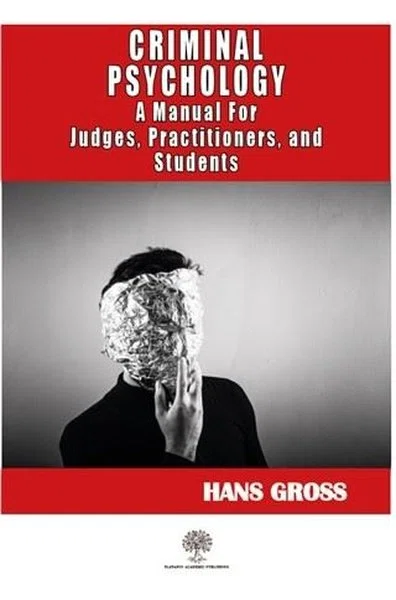
Criminal Psychology: A Manual for Judges Practitioners and Students
“Concerning himself, the judge must continually remember that his business is not to fit all testimony to the already furnished confession, allowing the evidence to serve as mere decoration to the latter, but that it is his business to establish his proof by means of the confession, and by means of the other evidence, independently. The legislators of contemporary civilization have started with the proper presupposition—that also false confessions are made,—and who of us has not heard such? Confessions, for whatever reason,—because the confessor wants to die, because he is diseased,[62] because he wants to free the real criminal,—can be discovered as false only byshowing their contradiction with the other evidence. If, however, the judge only fits the evidence, he abandons this means of getting the truth. Nor must false confessions be supposed to occur only in case of homicide. They occur most numerously in cases of importance, where more than one person is involved. It happens, perhaps, that only one or two are captured, and they assume all the guilt, e.g., in cases of larceny, brawls, rioting, etc. I repeat: the suggestive power of a confession is great and it is hence really not easy to exclude its influence and to consider the balance of the evidence on its merits,—but this must be done if one is not to deceive oneself. (Tanıtım Bülteninden)
Book details
- Genre
- Reference
- Publisher
- Platanus Publishing
- Publication year
- 2020
- ISBN
- 9786257078078
- Page count
- 672
- Edition
- 1
- Language
- English
- Author
- Hans Gross
Reviews
- Views
- 0
- Likes
- 0
- Ratings
- 0
- Reviews
- 0
- Average rating
- —